

The Evolution of the Rock Drilling Machine: XIANGHE SHENLI’s Path to Global Leading Status
Official Website: https://www.y-sld.com
The global mining, quarrying, and heavy infrastructure industries have always evolved alongside their primary tools. Among these, the raw mechanics of breaking stone have transitioned from manual labor to highly sophisticated mechanical systems. To understand modern infrastructure engineering is to understand how the Rock Drilling Machine became the backbone of subsurface development. As project environments grow increasingly demanding—moving into deeper tunnels, unstable geographical strata, and tight operational timelines—the call for an Advanced Rock Drilling Machine In The Field Manufacturer has never been louder. Companies like XIANGHE SHENLI have spent years navigating this transition, shifting from local equipment providers to prominent players on the international trade stage by matching engineering advancements with the practical realities of fieldwork.
From Mechanical Brute Force to Pneumatic Precision
To understand where modern excavation stands today, we have to look back at how painfully slow and dangerous the early days actually were. For centuries, breaking hard rock relied on nothing but human muscle, heavy sledges, and hand-held steel chisels. This primitive method was not just slow; it was incredibly exhausting and caused countless injuries.
The Era of Muscle and Early Steam Experiments
The first real attempt to replace manual pounding came during the early Industrial Revolution with the invention of the steam-powered impact drill. While steam engines revolutionized factories and railways, they were a complete nightmare underground. They produced massive amounts of choking heat, leaked scalding water everywhere, and required complex boiler setups that were simply too dangerous and impractical inside confined tunnel shafts.
The Shift to Compressed Air Power
The real game-changing breakthrough arrived in the mid-19th century when engineers realized that compressed air was the perfect fuel for subsurface environments.
This led to the creation of the first true Pneumatic Rock Drill. Instead of heavy boilers, a distant surface compressor supplied high-pressure air through hoses, which simultaneously cooled the tunnel and brought fresh air to the workers. By utilizing specialized directional air valves to drive an internal piston against a rotating drill steel, operators achieved a massive jump in structural penetration rates. This period marked the initial phase of industrial rock excavation, turning the Percussion Drill into a standard site requirement across global mining sectors and establishing it as an indispensable Drill For Mining tool.
Overcoming Early Pneumatic Faults
However, these early pneumatic designs were notoriously stubborn and difficult to handle. They were massive, heavy iron beasts that lacked any internal vibration damping, meaning the machine shook the operator just as hard as it struck the rock. Even worse, the earliest versions used a "dry drilling" method that kicked up clouds of toxic silica dust, making tunnel work incredibly hazardous. Furthermore, the mechanical valves were fragile; they frequently clogged with debris or froze up due to expanding air moisture. Operators on the ground did not care about flashy engineering blueprints if the heavy equipment kept failing on us midway through a critical shift.
Post-Invention Innovations and Refinements
This operational friction sparked a massive wave of innovation right after the basic rock drill appeared on the market. Manufacturers recognized that raw power meant nothing without reliability. The first major post-invention innovation was the integration of internal water-injection channels. By pushing water through the center of the hollow drill steel directly to the cutting face, "wet drilling" completely suppressed the dangerous dust clouds and flushed out rock chips in real-time, preventing the drill bits from getting jammed.
Next came the transition from bulky external valve chests to streamlined, integrated internal air distribution systems. Engineers perfected the automatic rifle-bar rotation mechanism, which meant the drill bit turned slightly with every single strike without needing a separate motor. They also swapped out brittle cast iron for heat-treated forged alloys, drastically reducing the weight while increasing impact resilience. The evolution successfully shifted from basic, uncoordinated impact tools to highly refined systems where air consumption, piston stroke, and rotational speed were perfectly balanced to limit operational downtime.
Engineering the Balance of Impact and Reliability
As extraction projects moved from open pits to deep underground networks, the operating conditions for Rock Drilling Equipment became far more punishing. In a tunnel or deep mine shaft, a tool failure is more than just a line item on a maintenance report; it stalls the entire production cycle and compromises crew safety. This reality forced the industry into a secondary evolutionary phase focused heavily on material sciences and internal mechanics.
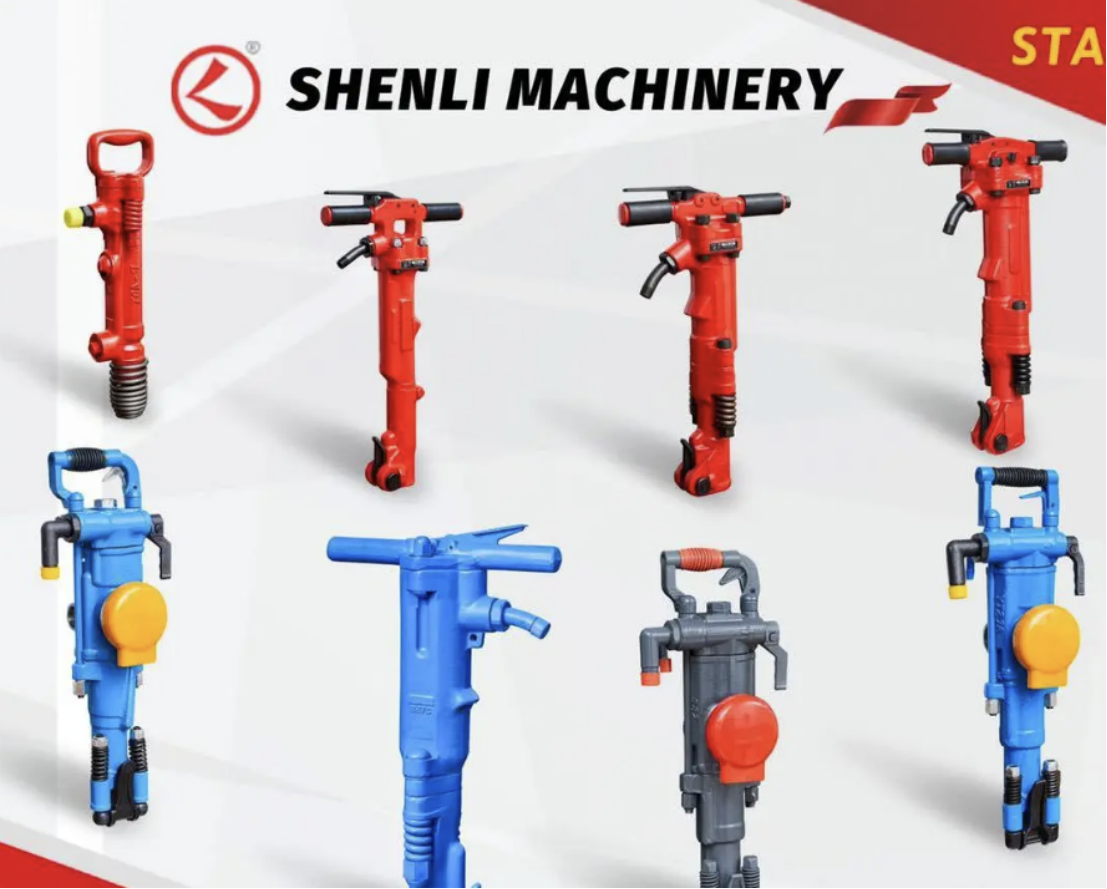
Modern industrial sites require machinery that delivers extreme impact energy without rattling itself to pieces. To achieve this, the modern Rock Drill had to integrate specialized alloy steels capable of absorbing millions of high-frequency kinetic strikes per shift. For instance, high-durability air leg rock drills like the YT27, YT28, and YT29A series were built to resolve the exact issues that plagued early designs. By optimizing the internal air distribution systems, these units maintained steady percussion power even when regional air compressor pressure fluctuated on the job site.
Additionally, the development of specialized support tools, such as heavy-duty pneumatic crushers like the TPB40 and TPB90, proved that rock breaking required a varied approach. A site cannot rely on a single mechanism; it needs a complementary fleet of impact tools, rock drills, and stable air compressors working together. By refining the heat-treatment processes of internal cylinders and pistons, modern suppliers managed to lower internal wear rates, ensuring that heavy machinery could run for extended shifts without losing operational torque or requiring constant emergency parts replacement.
The Future of Rock Excavation and Sustainable Development
As the global heavy industry turns its attention toward long-term operational efficiency and worker safety, the development of rock drilling technology is entering a new chapter. The focus is no longer just on how fast a bit can cut through hard rock, but on how cleanly and safely it can do so. High noise levels, heavy dust exposure, and extreme physical strain are major operational challenges that modern engineering must solve.
The next generation of underground mining and tunnel construction equipment relies on smarter air management and better ergonomics. Reducing air consumption without losing impact energy directly lowers the fuel costs of diesel-driven air compressors, creating a much smaller environmental footprint for large infrastructure projects. At the same time, improving internal water-flushing systems ensures that dangerous silica dust is suppressed right at the point of impact, protecting operators' health and keeping visibility clear in confined spaces.
Furthermore, integrating smart transport solutions—like specialized mining electric dump tricycles—with heavy drilling setups shows a clear shift toward smarter, more cohesive project sites. By matching low-emission transport with highly durable, high-efficiency pneumatic tools, modern industrial operations can maintain continuous workflows. The path forward for international development relies entirely on this balance: building heavy equipment that can take a beating in the field while delivering
the reliable, cost-effective, and safe operational standards that modern global projects demand.
To explore a complete portfolio of high-efficiency mining, quarrying, and construction equipment engineered for demanding global environments, visit the comprehensive product selection available at the official SHENLI Product Directory.
SHENLI MACHINERY TRADING CO.,LTD
SHENLI MACHINERY TRADING CO.,LTD
email us here
Legal Disclaimer:
EIN Presswire provides this news content "as is" without warranty of any kind. We do not accept any responsibility or liability for the accuracy, content, images, videos, licenses, completeness, legality, or reliability of the information contained in this article. If you have any complaints or copyright issues related to this article, kindly contact the author above.
